
Vintage texture is persuasive because it arrives with emotional baggage. Grain suggests memory. A light leak feels accidental and intimate. A date stamp can make a new image look recovered. Those associations are useful, but they can also let a director approve a look before deciding what the shot must tell the audience.
The right AI Screenwriting Software should keep visual style downstream from dramatic intent. Laper does that by attaching storyboards to scenes, preserving ordered shots, and recording explicit camera choices while the screenplay remains the source of scene action. The software can organize the test; it cannot decide what nostalgia means in a particular film.
Compare Three Routes To A Vintage Look
A filmmaker can begin with a filter, begin with the scene, or build the two together. Each route is defensible. The mistake is treating them as equivalent because the final stills share the same grain and color cast.
| Route | First decision | Strongest use | Main failure |
| Filter first | Choose a visible period effect | Fast mood exploration | Every shot inherits the same emotional answer |
| Scene first | Define audience information and change | Clear dramatic coverage | The final look may feel visually cautious |
| Intent-led hybrid | Test style against one shot job | Meaningful, repeatable visual rules | Requires more rejection before approval |
The hybrid route offers the best discipline for story work. It allows a visual experiment, but the experiment must answer a question. Does the flare hide a face at the moment recognition matters? Does a timestamp clarify chronology or create a false documentary claim? Does double exposure express a character’s memory, or merely announce that the film is artistic?
Reject Style Tests With No Shot Job
Write a one-line job for each test frame: conceal the witness until the door opens, show that two moments occupy the same memory, or hold on the empty chair after the speaker leaves. A frame that looks attractive but cannot satisfy its job is not coverage yet. Save it as visual exploration, not as an approved storyboard decision.
Dazz Cam’s own appeal makes the distinction easy to see. More than 50 vintage filters, light leaks, fisheye effects, double exposure, and exposure controls can change how an image feels. None of those choices establishes who has power in the scene or which fact the audience must notice.
A breakup scene offers a useful trap. Give it washed color and a home-movie date stamp, and the frame may imply that someone inside the story recorded the moment. If the scene is actually an objective present-tense event, the effect has introduced a point of view the screenplay never established. The treatment is no longer neutral decoration.
Test One Scene With Four Controlled Frames
Choose a short scene with one reveal. Avoid a montage or an action sequence for the first test. The point is to see whether a style choice helps the audience read a change, not whether it can decorate many locations.
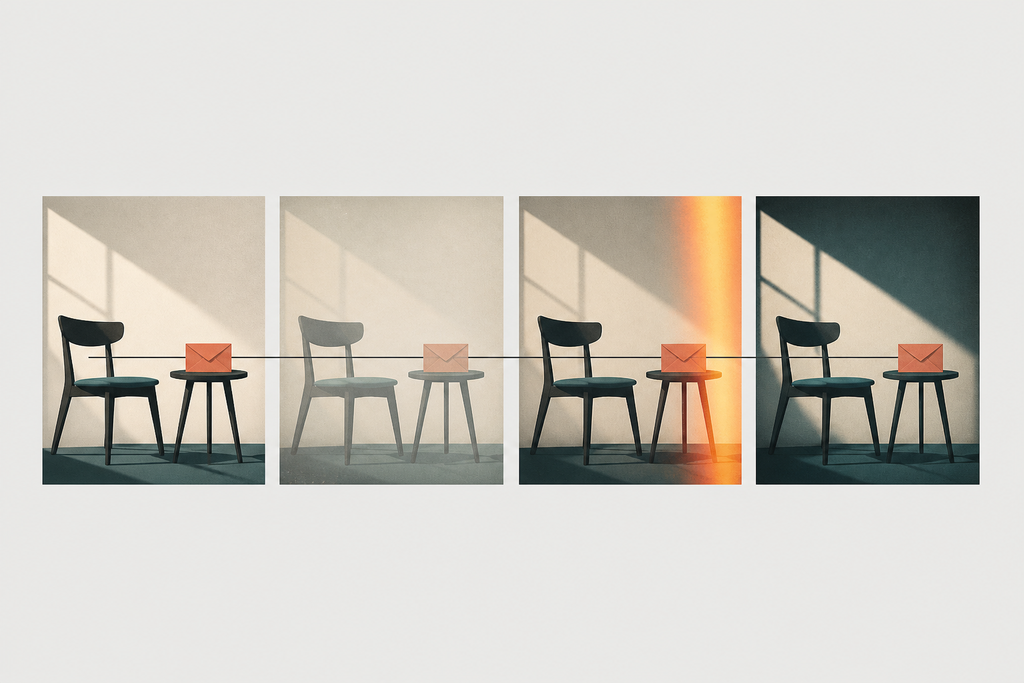
Frame One Establishes The Unstyled Baseline
Start with the plainest coverage that communicates the scene. Record the subject, shot size, angle, movement, lens, and the information revealed. In Laper, those camera choices can remain explicit at the shot level, and the ordered collection stays inside the scene instead of becoming an unlabeled image folder.
The baseline may never appear in the final film. It exists so the team can tell what the vintage treatment adds or removes. Without it, every later comparison becomes “Do we like this?” rather than “Did the audience lose the letter in her hand?”
Frames Two And Three Change One Variable
Make one frame softer and lower in contrast. Give the next a strong leak crossing part of the composition. Hold subject position and framing constant. If the reveal depends on a small object, check whether the treatment buries it. If the look makes the image harder to read in a useful way, name the story reason.
An AI screenplay software workflow can keep these tests associated with the requesting scene and shot. Laper routes generated frames through durable tasks and project assets, but a completed image task is not an artistic approval. The director still decides which version earns a place in the ordered board.
Frame Four Tests The Cut Not The Still
The last frame should respond to its neighbor. Laper can require the previous storyboard image as a continuity reference for a later shot; when that required reference is missing, the generation request is blocked instead of producing an unrelated frame and calling it continuous.
That is useful discipline, but visual continuity is not merely matching color. Compare eyeline, screen direction, subject scale, prop position, and what changes across the cut. A convincing retro still can still make a confusing edit.
Run the cut once with the effect and once without it. If both versions reveal the same fact but one sharpens the intended memory or unease, the style is contributing. If viewers understand different events, the team must decide which reading the screenplay supports before approving the frame.
Score Meaning Before Texture And Color
Review the four frames at small size and without discussing the tool used to make them. Ask an uninvolved reader to point to the reveal, describe the emotional shift, and identify which detail changed. Their confusion is more valuable than the team’s familiarity with the intended story.
Use A Five-Part Shot Intent Score
- Information: the required fact remains visible or is deliberately concealed.
- Performance: the treatment does not erase the expression or gesture carrying the turn.
- Continuity: the frame connects clearly to the shot before and after it.
- Motivation: the vintage effect has a story reason beyond period decoration.
- Repeatability: the rule can guide another scene without becoming a universal preset.
A frame can fail one category and still be useful. A blown highlight may hide information but support a memory fracture. The team should record that tradeoff rather than quietly lowering the standard because the image is beautiful.
Laper’s Script and Cinema project types also require a deliberate boundary. Script projects own screenplay scenes and their attached storyboards; Cinema projects organize visual production through reels. They are peer documents, not an automatic conversion path. Choose the workspace that owns the current decision instead of expecting a style experiment to rewrite the screenplay.
Approve A Visual Rule Not A Favorite Filter
The useful output from the test is a sentence the next shot can obey: use light leaks only when memory interrupts present action; keep faces clear during factual reveals; let date stamps appear only on images a character could possess. A rule carries meaning across production. A favorite filter carries a look.
The workspace fits a writer-director who wants screenplay facts, shot order, camera intent, and reference frames to remain connected during exploration. A simple photo editor may be enough when the job is only to finish an isolated promotional still.
Approve the retro treatment after it survives the cut, not when the first frame looks nostalgic. The style should make the audience read the scene more precisely. If it only makes the production look older, it has not yet earned control of the image.