
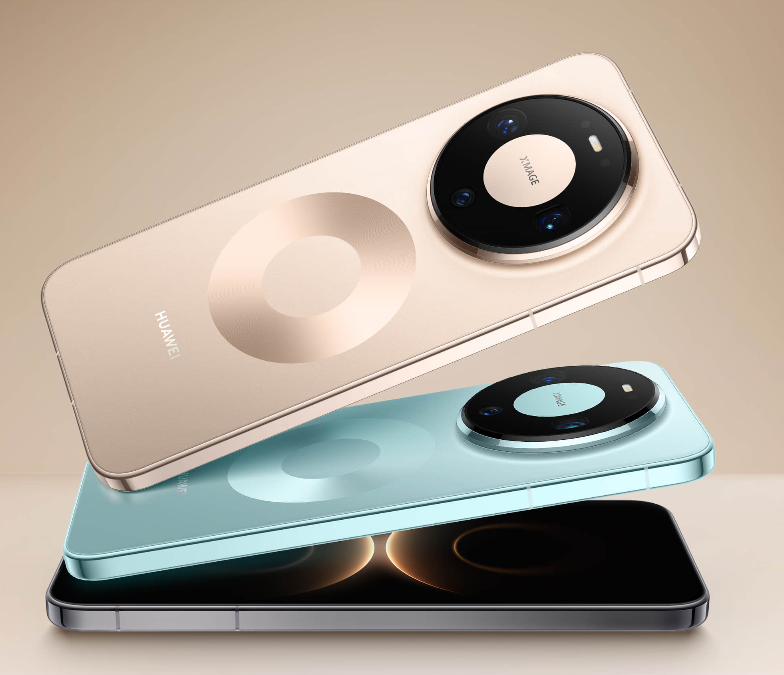
For years, the “professional photography” tag was a bit of a stretch for smartphones. We had decent sensors and some clever software tricks, but if you really wanted to capture the soul of a landscape or the intricate texture of a flower, you’d still reach for a bulky DSLR. That gap just got significantly smaller. With the release of the huawei mate 80 pro, we aren’t just looking at another incremental update; we’re looking at a shift in how mobile optics handle light, depth, and detail.
Let’s break down why this specific piece of tech is causing such a stir among mobile photography enthusiasts and why it actually earns the “game changer” label.
The Magic of the Physical Aperture
The biggest hurdle for phone cameras has always been the fixed lens. Most phones use software to fake “bokeh” (that blurry background effect). It’s getting better, but it often looks digital and “clipped” around the edges of a person’s hair.
The huawei mate 80 pro tackles this with its Ultra-Aperture XMAGE camera. We’re talking about a physical, ten-stop variable aperture ranging from $f/1.4$ to $f/4.0$. This isn’t just a fancy spec on paper—it’s a tool that changes your shots in real-time. If you’re shooting a portrait in low light, the lens opens up to $f/1.4$ to let in a massive amount of light, creating a natural, creamy blur that software simply can’t replicate. On the flip side, if you’re capturing a group shot or a wide landscape and want everything in sharp focus, the lens stops down to $f/4.0$. It’s the kind of control photographers used to dream about having in their pockets.
Mastering the “Golden Hour” Every Hour
We’ve all been there: you see a breathtaking sunset, pull out your phone, and the resulting photo is either a grainy mess or a blown-out orange blob. Huawei’s RYYB (Red-Yellow-Yellow-Blue) sensor technology has been refined to a point where it almost feels like “night vision.”
By replacing green pixels with yellow ones, the sensor can absorb significantly more light. When you pair this with the new XD Fusion Pro image engine, the huawei mate 80 pro manages to preserve the highlights while pulling incredible detail out of the shadows. It doesn’t over-brighten the scene to make it look like daytime; instead, it captures the mood of the low light. You get the texture of the cobblestones and the glow of the streetlamp without the artificial “processed” look that plagues so many other flagships.
Macro Photography: Finding the Universe in the Small
If you haven’t tried macro photography, you’re missing out on a whole world. Traditionally, “macro mode” on a phone meant switching to a low-quality ultra-wide lens and getting awkwardly close to your subject.
The huawei mate 80 pro flips the script with its Ultra-Lighting Telephoto Macro. It allows you to take stunningly detailed close-ups from a comfortable distance. This is huge for two reasons:
- Lighting: You aren’t casting a shadow on your subject with the phone itself.
- Perspective: You get a much more flattering, compressed look.
Whether it’s the microscopic frost on a leaf or the intricate mechanical heart of a luxury watch, the clarity is breathtaking. It makes the tiny world look monumental.
The Human Element: Why EEAT Matters
When we talk about Experience, Expertise, Authoritativeness, and Trustworthiness, it’s not just about the hardware—it’s about the result. Huawei’s XMAGE system isn’t just about chasing megapixels; it’s an expert-led philosophy of “Style over Stats.”
The images produced aren’t just sharp; they have a certain “film-like” quality. The color science avoids the neon-bright oversaturation common in mobile photography, opting instead for a palette that feels authentic to the human eye. This focus on “truth in photography” is what builds trust with professional creators who are increasingly using the huawei mate 80 pro as their primary “B-roll” or street photography tool.
Final Thoughts
Is it the “perfect” camera? Nothing is. But the huawei mate 80 pro pushes the boundaries of what’s possible within the constraints of a glass-and-metal sandwich. It’s a device that encourages you to slow down, adjust your settings, and actually compose a shot rather than just pointing and clicking.
For anyone who’s ever felt limited by their smartphone’s camera, this isn’t just an upgrade—it’s an invitation to see the world a bit differently. Whether you’re a pro looking for a pocket-sized companion or a hobbyist who wants their vacation photos to actually look like the memories they represent, the tech here is a genuine leap forward.